Case file BK002Apps · 2017–2018
Sarahah: one link, far too many suspects.
In 2017, Sarahah links and turquoise screenshots filled social feeds. Anonymous compliments invited guessing games; abusive messages showed the cost of a missing name.

Inside this case
The turquoise screenshots are a good place to start. In August 2017, people were posting anonymous messages they had received on Sarahah back onto the social networks where their friends could read them. Private feedback had become something for the rest of the feed to inspect.
NDTV’s coverage that month (opens in a new tab) collected reactions to the screenshots, including complaints about recipients asking anonymous senders to message them directly. Having invited people to say something without giving their names, you could then spend the afternoon trying to get the name after all.
It is an understandable change of heart. A compliment is nice. A compliment that might be from someone you fancy requires further investigation.
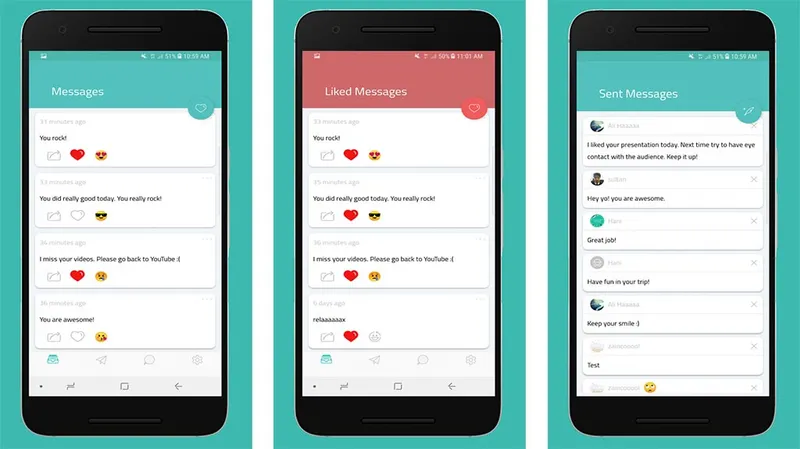
The inbox, the favourites and the messages sent: Sarahah made anonymous feedback look like something ready to screenshot. These are the historical app examples reproduced by Android Authority.
Source: Sarahah / Android Authority (opens in a new tab). Editorial excerpt. Converted to WebP for display; original framing retained.
This was meant to help you talk to your boss
Sarahah began as a workplace-feedback website in November 2016, created by Saudi developer Zain al-Abidin Tawfiq. The original idea (opens in a new tab) was to let employees give their bosses honest feedback anonymously. There are obvious reasons an employee might appreciate that option.
The mobile app followed in 2017. Users could share a personal link for other people to leave messages, and Snapchat’s new link-sharing feature helped it spread internationally, as Android Authority’s history explains (opens in a new tab).
Put that link in front of friends and acquaintances, though, and constructive feedback about your management style is probably not what you are hoping for. You have offered people a way to say something they wouldn’t normally say to your face. Curiosity about what might arrive is a fairly strong reason to check an inbox.
You didn’t need to learn much to take part. Share the link, wait for a message, and discover how much you cared about what somebody thought of you.
That sounds like someone you know
Imagine receiving a kind message with no name attached. You might have a candidate in mind before you have finished reading it. Then you notice the spelling, or a word that another friend tends to use, and start reconsidering.
There is very little evidence to work with, which needn’t stop you. The person you would like it to be may have a considerable advantage over the other suspects.
That guessing game helps explain the appeal. A named compliment has a fairly straightforward meaning. An unsigned one leaves room for a much more flattering possibility, and you can keep that possibility going for quite a while without proving anything.
The screenshots gave other people something to react to as well. NDTV’s roundup preserved jokes about the flood of posts, alongside the requests for senders to identify themselves. Even people with no interest in signing up could end up reading somebody else’s feedback. A friend posting an anonymous compliment still had their own name above the post.
It could be playful. It could also become a miserable way to find out what somebody was prepared to say when you couldn’t identify them.
The messages you hadn’t asked for
The trouble was visible during the craze itself. The Indian Express’s August 2017 account described people sharing inappropriate and derogatory messages. The promise of honesty offered little comfort to someone receiving abuse. They still had to deal with the message, without knowing who had chosen to send it.
In February 2018, Apple and Google removed Sarahah from their app stores following a campaign about bullying. Android Authority records that neither company publicly commented on the specific decision. Its account also says the website remained available then; removal from the stores wasn’t the same as the service disappearing overnight.
Removal limited how new users could find the app. It didn’t identify the people responsible for messages already sent.
Those old requests for anonymous senders to get in touch are still rather revealing. If you had joined hoping to hear from a particular person, you could end up with a very nice message and still be none the wiser.
The craze timeline
The rise. The afterlife.
A Bukhaar reading, from first spark to afterglow.
- WarmAn anonymous workplace suggestion box goes online. (opens in a new tab)
- Fever pitchIndian coverage follows the anonymous-message wave. (opens in a new tab)
- CoolApple and Google remove Sarahah from their app stores. (opens in a new tab)
- CoolRemembered here for its 2017 wave. The documented store removals came in February 2018.
A little temperature check
The bukhaar meter.
At its peak · Aug 2017
Fever pitch
Indian coverage follows the anonymous-message wave.
Now · Nov 2026
Cool
Remembered here for its 2017 wave. The documented store removals came in February 2018.
Peak: Fever pitch · Now: Cool
Bukhaar’s editorial take · Nov 2026