Case file BK019Internet rituals · March–April 2025
AI Ghibli portraits: that’s your cat in the picture.
In March 2025, people turned photos and memes into Ghibli-like images. Recognisable faces made the results appealing; the borrowed look brought questions about artists and credit.
Inside this case
One of the photographs turned into a Ghibli-like image in March 2025 was of a cat called Mali. Associated Press reported (opens in a new tab) that Mali’s owner uploaded the picture to ChatGPT’s new image generator and asked for the transformation.
It is a useful example of the attraction. You didn’t need an elaborate idea for a picture. Something you already liked looking at could become a new version of itself, with enough of the original left for you to recognise.
A pet, a family photograph or an existing meme could provide the starting point. The resulting pictures had a familiar look that gave people another reason to pass them around.
A new tool met a look people already knew
OpenAI released native GPT-4o image generation on 25 March 2025 (opens in a new tab). Its announcement described transforming uploaded images as well as generating new ones. In the days that followed, Ghibli-like transformations became a conspicuous use of the tool.
Studio Ghibli’s films had already made a particular kind of animated world familiar to audiences. Bringing something from your own photograph into an approximation of that world could be pleasing before you considered how it had been produced.
The result was also easy to discuss with someone who knew the original. Did it still look like the person? What had happened to the background? Had the tool changed an expression that was the whole reason you liked the photograph?
You could enjoy comparing those details without having planned to spend time with an image generator that day. Seeing somebody else’s result supplied a fairly immediate question about what it might do with yours.
Recognising a face was only half of it
The appeal depended on two kinds of familiarity. The subject came from a photograph; the requested appearance came from work people associated with an actual animation studio. A tool had made it possible to bring them together quickly.
A group portrait also gave you more faces to check. A result might look charming overall while leaving someone wondering why the others were recognisable and they had acquired an entirely different face. The general effect wasn’t necessarily the detail each subject would examine first.
Calling the output Ghibli-style described what a user was seeking. It didn’t make the picture a Studio Ghibli production or imply that its artists had worked on the portrait. The distinction matters even when the person sharing it intended the label affectionately.
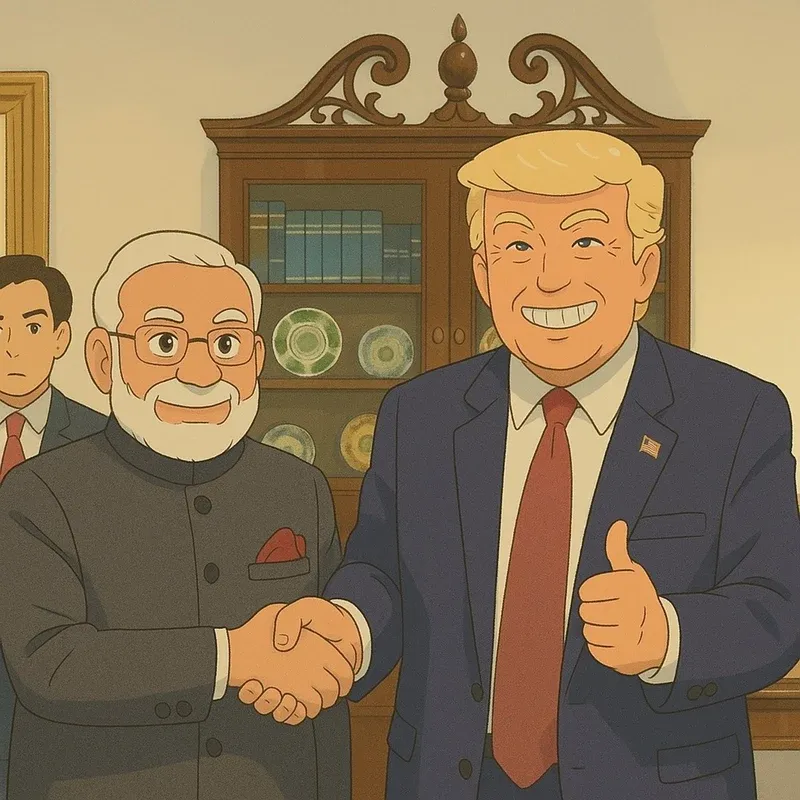
A generated image shared by MyGov India during the 2025 wave, as reproduced in the contemporary coverage. Familiar public figures received the borrowed animated look too; this was not a Studio Ghibli production.
Source: MyGov India, via The Indian Express (opens in a new tab). Editorial excerpt. Converted to WebP for display; original framing retained.
The Indian conversation included the artists
The Indian Express’s April cultural coverage (opens in a new tab) explored the debate about artistic styles and copyright. AP’s contemporary account also recorded concerns from artists about training and creative work. Those objections were part of the craze while the pictures were circulating, rather than something added much later.
The debate doesn’t produce one simple legal verdict for every generated picture. It does make the word “style” carry more weight than a casual portrait request might suggest. People wanted the appearance because somebody else’s films and drawings had made it desirable.
Mali’s portrait captures the smaller, more personal side of the wave: somebody wanted to see a beloved cat in a different kind of picture. The cat was familiar. The look was familiar. Bringing the two together was enough to make the result worth sharing, and enough to raise a question about who should get the credit.
The craze timeline
The rise. The afterlife.
A Bukhaar reading, from first spark to afterglow.
- WarmOpenAI releases native GPT-4o image generation, including transformations of uploaded pictures. (opens in a new tab)
- Fever pitchIndian cultural coverage examines the Ghibli-like portrait wave and artists’ concerns. (opens in a new tab)
- WarmThe March–April 2025 wave is the chapter here. The studio’s artists and the unrelated image tool retain separate credits.
A little temperature check
The bukhaar meter.
At its peak · Apr 2025
Fever pitch
Indian cultural coverage examines the Ghibli-like portrait wave and artists’ concerns.
Now · Nov 2026
Warm
The March–April 2025 wave is the chapter here. The studio’s artists and the unrelated image tool retain separate credits.
Peak: Fever pitch · Now: Warm
Bukhaar’s editorial take · Nov 2026