Case file BK020Internet rituals · September 2025
Nano Banana: the saree portrait came with instructions.
September 2025’s Nano Banana saree trend paired familiar faces with retro lighting and film-like portraits. Indian users gave an image tool a very specific makeover to attempt.
Inside this case
The instructions could be much longer than the caption. There was a face to keep recognisable, a saree to describe and a particular kind of lighting to request. The finished portrait was supposed to look as though taking it had required rather more than a message to an AI tool.
In September 2025, the retro-saree variation of the Nano Banana image craze offered a specific kind of makeover. A contemporary photograph could become a portrait with the clothing and mood of an older film image.
You didn’t have to remember that era personally to have a fairly strong opinion about how you wanted to look in it.
A new model, an old-fashioned picture
Google’s Indian blog on 12 September 2025 (opens in a new tab) described the response to its Gemini image model known as Nano Banana. Retro and vintage portraits were among the uses it highlighted, with requests for film grain, lighting and fabric details.
The company’s account described a broad image-making wave. Its global totals don’t tell us how many saree portraits Indian users made.
Moneycontrol’s 15 September report (opens in a new tab) documented the saree-specific version and its Bollywood-inspired appearance. This gave the general portrait craze a recognisable local form. The desired image could evoke film dress and lighting rather than a generic change of background.
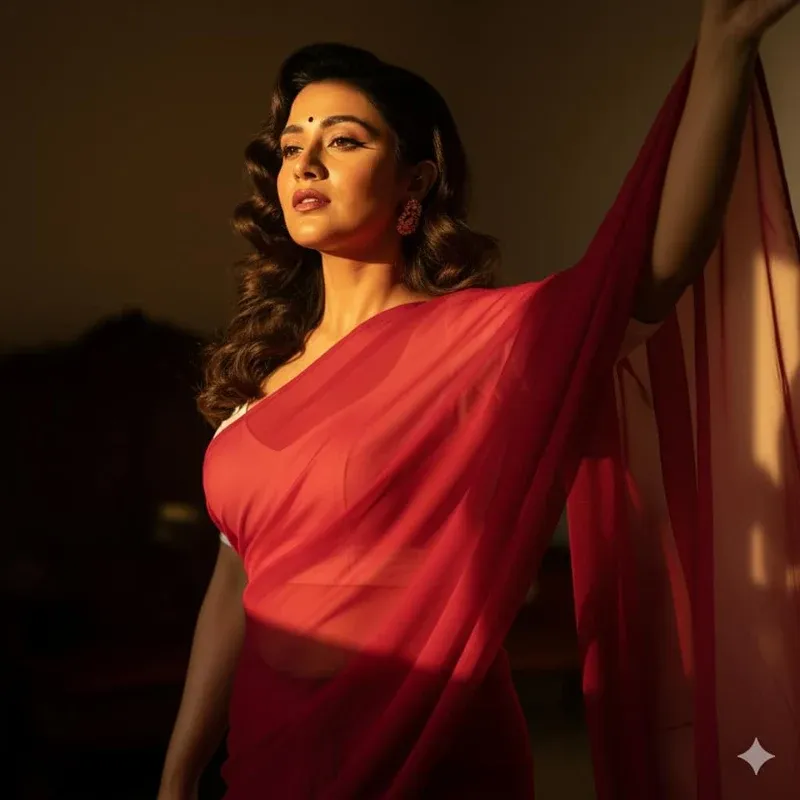
A red saree and carefully requested light: the generated portrait used in Moneycontrol’s September 2025 report shows the particular kind of makeover people were seeking. It records an AI output, not an actual photo shoot.
Source: Moneycontrol · Published Nano Banana saree-trend example (opens in a new tab). Editorial excerpt. Converted to WebP for display; original framing retained.
The past was being assembled from visual choices. You could ask for the mood you recognised without needing to recreate a particular photograph from your own family album.
Same instructions, a different person in the frame
A shared prompt gave people a way to seek related-looking results with their own photographs. That is a fairly appealing arrangement for a portrait trend: enough similarity for someone to recognise what you tried, enough difference for the result to feel personal.
Comparing the result with the photograph you supplied could change your first impression. The saree and the light might look convincing, but an otherwise successful makeover would be less useful if the person wearing it was only approximately you.
That small inspection was part of the attraction as well as a limitation. You could examine the details, try again or decide one version was good enough to share. The finished picture didn’t reveal how many instructions you had added before you were satisfied.
It remained a generated image. The subject hadn’t necessarily worn those clothes, stood in that light or attended a photo shoot. A convincing result could make an imagined portrait enjoyable without turning it into a record of an actual occasion.
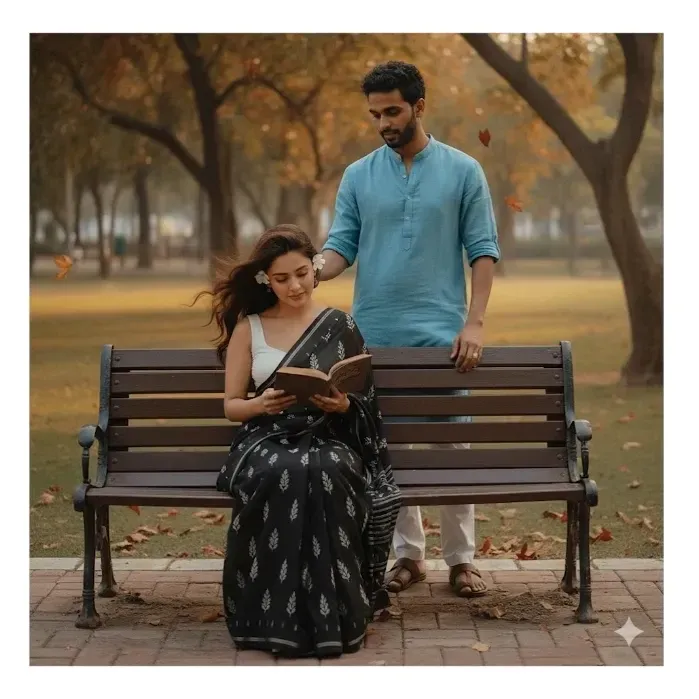
Another retro result in Google India’s September showcase: a park bench, a book and film-like autumn light. The shared look could cover a whole scene as well as a single saree portrait.
Source: Google India / Gemini showcase (opens in a new tab). Editorial excerpt. Converted to WebP for display; original framing retained.
The outfit was part of the idea
Google’s 2025 Indian search review (opens in a new tab) later noted interest in saree-trend prompts. The clothing had become specific enough to be something people searched for, rather than a minor detail inside the wider image craze.
That is what distinguishes this wave from simply asking a tool to improve a selfie. People were seeking a particular sort of picture and borrowing a familiar set of film references to describe it.
The portrait could be ready without the wardrobe or the appointment. You still had to look closely enough to decide whether you recognised the person wearing the saree.
The craze timeline
The rise. The afterlife.
A Bukhaar reading, from first spark to afterglow.
- HotGoogle describes Indian participation in retro and vintage portrait making. (opens in a new tab)
- Fever pitchMoneycontrol documents the saree-specific, Bollywood-inspired portrait variation. (opens in a new tab)
- WarmGoogle’s Indian search review notes interest in saree-trend prompts. (opens in a new tab)
- WarmThe retro-saree portrait has a specific September 2025 setting; the later search review does not measure current use.
A little temperature check
The bukhaar meter.
At its peak · Sept 2025
Fever pitch
Moneycontrol documents the saree-specific, Bollywood-inspired portrait variation.
Now · Nov 2026
Warm
The retro-saree portrait has a specific September 2025 setting; the later search review does not measure current use.
Peak: Fever pitch · Now: Warm
Bukhaar’s editorial take · Nov 2026